
Image by
Cool Text: Logo and Button Generator -
Create Your Own Logo

The Tradition of coloring easter eggs goes back all long time. As far back as the ancient daysof Rome, eggs were colored using natural dyes as a way to celebrate the transition of winter into spring.
Eggs have been a symbol of fertility, new life, and
birth, and were adopted sometime during early Christian history as a symbol of the resurrection of Jesus from the dead after his crucifixion (
http://ashleyanderson.suite101.com/the-history-of-coloring-easter-eggs-a361874).
The
History Channel reports that, from the perspective of Christianity, eggs have come to represent Jesus leaving his tomb and being resurrected, despite eggs not appearing as a religious symbol in the Bible.
Coloring eggs for Easter dates back to the thirteenth century, when it is believed that eggs may have been a food that was forbidden during the Lenten season due to the significance it took on in regards to Jesus. Christians would decorate eggs during Lent and then, once Lent ended on Easter morning, would eat the eggs.
Eggs were traditionally decorated in bright colors to symbolize the colors and brightness of spring, says
Fabulous Foods. Different cultures would decorate eggs in different ways, such as the Greek Orthodox coloring eggs a dark red color and baking them in breads to symbolize the blood of Christ, or the Germans using ferns, leaves, and flowers to create different stenciling effects on eggs.
Additionally, more elaborate Easter eggs emerged as the art of decorating Easter eggs evolved throughout the years. The Ukranian art of Pysanki eggs, or eggs that were decorated by layering melted beeswax and dye in various designs to create the pattern on the egg shell. The Russians also became known for the Faberge egg, or an elaborately designed egg that was turned into various kinds of trinkets (
http://ashleyanderson.suite101.com/the-history-of-coloring-easter-eggs-a361874).
Modern Ways of Coloring Easter Eggs
Today, Easter eggs are typically blown, or removing the egg's contents by blowing them out of a tiny hole in the shell, or are hard boiled prior to decorating. Blown Easter eggs can be carefully preserved and displayed year after year, while hard boiled Easter eggs are often eaten or included in a variety of
Easter dinner dishes.
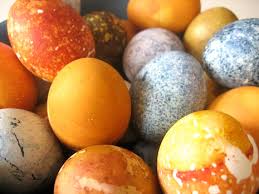
Eggs are decorated in a variety of ways, either by using markers, crayons, and stickers to egg dyes to paints to
eco-friendly egg coloring dyes that are made out of household goods. Pysanki eggs and
Fabrege eggs, which have become increasingly rare, are sold at
auction for large sums of money.
Easter eggs have come a long way since their original role as a pagan symbol of spring. Today, coloring Easter eggs has become a family tradition that children, adults, artists, and everyday people can enjoy to celebrate Easter and the spring season.
Sources
- "Easter Symbols." The History Channel. History.com, copyright 1996-2011, accessed 26 March 2011.
- "Faberge Introduction." PBS. PBS.org, accessed 26 March 2011.
- Sicard, Cherie. "The History of Easter Eggs" Fabulous Foods. Fabulousfoods.com, accessed 26 March 2011.
Read more at Suite101:
The History of Coloring Easter Eggs | Suite101.com http://ashleyanderson.suite101.com/the-history-of-coloring-easter-eggs-a361874#ixzz1qo7pi8PJ
Read more at Suite101:
The History of Coloring Easter Eggs | Suite101.com http://ashleyanderson.suite101.com/the-history-of-coloring-easter-eggs-a361874#ixzz1qo7VQgam
Get More Information by Clicking Here


